Total Solar Eclipse Explained: Live!
Ask about WVFRM Podcast
Episode Description
It's time for a bonus episode! this time, we flew all the way to Spain to record a live podcast under the total eclipse. We brought a ton of gear and crew to do our best to make it feel like you were right there with us so we hope you enjoy!
This episode is in partnership with AirBnB! Thanks to AirBnB for helping make this possible.
Watch BTS on The Studio channel: https://youtu.be/ZrAkCJS9H1s
Chapters: 00:00:00 - Intro 00:01:36 - What is a total eclipse? 00:05:07 - Why Spain? 00:09:24 - How to take pictures of a solar eclipse 00:15:01 - Marques' Eclipse trivia 00:17:31 - AirBnB (Sponsored) 00:18:50 - David tries to win money from Marques 00:20:58 - More eclipse trivia 00:42:26 - Don't skip here for totality 00:48:05 - Thanks to the crew!
Waveform Threads: https://www.threads.net/@waveformpodcast Waveform Instagram: https://www.instagram.com/waveformpodcast/?hl=en Waveform TikTok: https://www.tiktok.com/@waveformpodcast
Join the Discord: https://discord.gg/mkbhd
Intro/Outro music by 20syl: https://bit.ly/2S53xlC
Waveform is part of the Vox Media Podcast Network.
Read the full transcriptHide the full transcript
- Marquez told me that if I can tell him a fact he's never heard about an eclipse,
- he'll give me a $100 per fact. >> And then what did you do? You just looked up a bunch of crazy obscure
- >> I looked up facts Marquez did not know about the eclipse. >> He literally Googled.
- >> Bring him on. All right. Did you know? [music] >> Yo, what is up people of the internet?
- Welcome back to another very special bonus episode of the Waveform Podcast. We're your hosts. I'm Marquez.
- >> I'm Andrew. >> And I'm David. >> And I'm Ellis. >> Yeah. >> I'm Adam. So, uh, audio listeners, this
- one I'm I don't usually say this, but I'm going to recommend fully 100% that you switch to the video version because
- if you are watching that, you can see we're in a totally different location. The Waveform Studio is uh out in
- Zaragoza, Spain today. And I say out because we're outside literally >> under the sun.
- >> Yeah, we're we're baking in the heat >> 102. >> But uh for a very special occasion
- because uh we're here to see a total solar eclipse today. The eclipse has already started. Uh, but the total is
- going to be happening during this episode which is very exciting. >> In about how long?
- >> In about Well, there's a there's a little clock in front of you. >> A little clock. Excuse you. This Sorry,
- it's huge. >> This is the Elio Rufus 9000. This is a customuilt eclipse timer complete with
- live ambient temperature, live light meter reading, like obscurity percentage reading. This is This is the real deal,
- bro. >> And uh I can't read it quite from here, but I think there's probably about 41
- minutes till totality, which is very exciting. Thanks to Airbnb for helping make this possible. Uh, this is a very
- different podcast, [laughter] but I'm so excited. I'm so excited we got to do it.
- Okay, so I just want to jump in real quick to explain just in case anyone doesn't know what is a total solar
- eclipse. Why are we doing this? Why are we here? Why do we want to see it? >> As you probably already know, the moon
- orbits the Earth and every once in a while they line up in just the right way where the moon casts a shadow on the
- Earth. >> Prove it. >> If [laughter] you'll see, you'll see. Give me 40 minutes. You'll see. Uh but when that
- does happen in that shadow, it creates a pretty phenomenal effect. Uh and in the
- center of that shadow, a total solar eclipse uh turns day to night briefly. Uh I have all sorts of fun facts I want
- to go through with you guys as we lead up to that. But um >> real quick, why are we in Spain to see
- this versus New Jersey? >> It's a really great reason to answer. [laughter] >> Fantastic question. Uh, I'll start with
- one of our fun facts, which is the width of that shadow is only 50 to 150 mi wide
- as it passes on planet Earth. And so there's just a very narrow band where you actually get to see
- >> the moon block out the sun. And for this particular eclipse, we are right near
- the end of that band. >> Uh, this this shadow goes from Greenland to Iceland to the edge of Portugal and
- through Spain. We thought about many of these other places to possibly shoot this podcast. Uh, but we ended up
- landing here. Maybe we should go over the backstory of how we got here and, uh, how we ended up choosing and
- actually putting this together at this spot. How did this all start? >> Well, like all great stories, this one
- begins >> in Ohio. >> Knew that's what you were going to say. >> Like every good story.
- >> Yeah. Okay. So, this is a complete a literal complete coincidence that this happened, right? You might have watched
- our uh our autofocus video about hybrids, right? on the main channel. We went out to a car collector in Ohio to
- go shoot that. And then I remember seeing a bunch of headlines on Twitter about how, oh, there's going to be this
- uh this total solar eclipse in the continental United States. If you get the chance to make the road trip to get
- to the path of totality, you should totally go see it. And I looked it up and unfortunately it was conflict during
- our uh our shoot, but luckily it happened to be exactly where we were shooting. So, we went out and we shot
- that. And when the eclipse happened, we put all our cameras down or most of them
- and we paused the car shoot and we just watched an unbelievable eclipse happen. And uh to me personally, that's the
- coolest thing I've ever seen. >> It was the coolest thing I've ever seen. >> And so I you know, we've several of us
- now have seen it. >> You weren't even there. >> He was in Ohio with us. >> Well, I I would love if by the end of
- this eclipse, you guys can all weigh in on on what you think of it. But yeah, this this was the my inspiration to see
- another one. So, >> and that was 2024. >> That was 2024. >> Last one. >> And we have clips in Slack of you
- putting a footage on of you guys all freaking out trying to yell like, "Oh my god,
- what's happening? Oh, the crickets. Oh my god, I can't hear anything." >> It was so cool. It was so cool. So, here
- we are uh for this eclipse. It has actually already begun. So, >> Oh. Oh, I'm so sorry.
- >> Oh, that's an interruption. >> Yeah. Yeah. That's the the Elio Rufus 9000 will be interrupting us from time
- to time. That one is uh just to announce that we are about 20% obscuration, obscurity. I don't I don't know what the
- actual word is. >> Um Google that before flying all the way to Spain, but um yeah, so at 20%
- obscurity, as I'm sure you know, Marquez, >> there's no difference. >> There's no difference. It's not.
- >> Um but uh can anyone actually read the temperature just so we can take note of
- of how much? Cuz the temperature will be dropping. Perhaps that's a steal your >> 911.
- It's begun. >> Almost as hot as the podcast studio. [laughter] >> Almost. It's true. Almost.
- >> Uh it is >> that's degrees Fahrenheit, by the way. Even though we're in Spain, we're still
- doing Fahrenheit. >> Yeah. It's very hot out here. >> Yeah. >> Okay. So So the original plan was we got
- to go we got to see this eclipse. But which one of these places do we choose to go see it? Right. Cuz it goes through
- Greenland, which is really close to like the the North Pole. It's super remote. That was already a little bit wild.
- There's kind of no roads and no plans out there. Then it goes through the west coast of Iceland. That one is
- interesting. >> I I would love to go to Iceland and see a total solar eclipse. >> Um seeing is the harder part in Iceland.
- >> Yeah, we were a little spooked. >> The weather changes very quickly in Iceland. It can be sunny and then it's
- cloudy. If you have a weather app, don't even have a weather app. There's no point.
- >> Yeah, just look up. >> Mark will still have a weather app. >> Yeah, I'll still have the weather app.
- But it is it [laughter] is constantly cloudy out there. >> Marquez has a weather app for that.
- Okay. Somewhere >> I have my Doppler predictions. I can see when it's it is currently as of this
- very moment uh cloudy and a little bit of rain in Iceland. So I think we made the right call. Um but then we saw that
- it also went through Spain and a little bit of Portugal and that sounds fun. So we started this whole long scouting
- journey because as you can see by this video setup, we have this all very well planned. So, we've got our chair, our
- tables, and our chairs and everything. I'm dead serious, but if you if we get a behind the scenes of this, we have this
- wide shot where the eclipse where the sun sets behind us will be right in the middle of the frame, which is amazing.
- >> Pretty crazy. >> It's pretty sick. Uh, and then >> you'll see there will be a studio up by
- the time this comes out, so you can see how all of this was shot. >> This came together in in quite the
- flurry, but there's so many moving parts. We also had to find, you know, a place that we could actually shoot this
- and not be surrounded by other people trying to look at the eclipse because it's a pretty common thing to actually
- go travel to go see the eclipse and experience it, photograph it, video it, and that's all of Spain right now is
- people trying to find cool places to shoot this. So, we had to find a place that we could get like a low on the
- horizon view of the sun that would not be filled with people. So, we we actually managed to do that. Shout out
- to Harper. She's also behind this camera over here. Um, and so there's many more
- many more factors that we all went through. We had to find a hotel that wasn't already booked because people are
- traveling here. It was a whole thing. But now we have found this spot and I think we did a pretty good job.
- >> Mhm. Yeah. >> What do you guys think of the scenery? >> Oh my gosh. Are you kidding? I don't
- know if the exposure will let you see super clearly, but behind us is the most gorgeous valley of vineyards. It's just
- lush green pastures all the way to the mountains in the back of our scene. >> Yeah, you can superimpose this in uh in
- post. Some photos. was believable. >> Audio listeners, close your eyes and imagine
- >> unless you're driving open. >> Don't do that. Wash the dishes. Yeah. So, [laughter]
- >> away from the dishes momentarily to appreciate this. >> You can imagine that your plate you're
- washing is the sun and the cup. [laughter] >> Yeah. >> The sponge >> moving across.
- >> So, what's cool about this, and I think we're going to try to get a drone up later to really get a good view of it.
- But, what's cool about this is we're elevated a little bit, and there are some very distant mountains. I'm going
- to I'm going to guess they're like a hundred miles away. I really have no idea how far away they are, but they're
- pretty far away on the horizon. And there's this huge valley between us and the mountains. And when the shadow
- finally reaches us, we're going to see that shadow like race across the valley at like a,000 miles an hour.
- >> What? >> And it's going to be a pretty bad idea. >> 1,000 miles an hour. >> By the way, I I have looked up a lot of
- Eclipse [laughter] stacks. >> I am full of them. I was I was saying earlier I'm approaching Neil deGrasse
- Tyson levels of uh complete coverage of this topic. So >> funny. Was that an Eclipse pun?
- >> Yeah, coverage. Yeah, it's good. >> Oh my god, he's on it today. For weeks I've been like Marquez, how's the doc
- coming along? He's like, don't worry, I got it. [laughter] >> I got a doc. I I have a separate doc
- that I haven't shared with you guys which has a bunch of trivia questions about eclipses. And if you're down, I
- would like to be like the sort of interim triviaar and ask you guys. These are meaningless points. It doesn't
- matter. >> Wait, no. What do we win? I want to win something. If you get the Eclipse
- classes, if you get one right, >> deal. But I do have I do have a separate doc secretly that you haven't seen full
- of eclipse facts. >> At some point, I'll ask you some questions about eclipses. >> Um, okay. One thing that comes up a lot
- when shooting or when looking at eclipses is people want to take pictures of them, take videos of them. We are
- actively doing that right now. We have a couple methods that we're using that we'll get into in a second. But I
- figured since we have David, we should talk a little bit about like what it's like to point a camera at the sun or if
- that's even a good idea. >> It's a bad idea. Generally, we're kind of doing it cuz we have solar filters.
- We have all this kind of stuff. If you have enough NDs, you can stack them. You can make sure that you're not setting
- your camera on fire. >> You said a lot of words I don't know >> that I think you probably know. Break it
- down. What's a solar filter? >> A solar filter. Okay. There's a lot of different types of radiation that are
- coming out of the sun. you know, it's heat, it's gamma radiation, it's all these types of radiation. Solar filter
- is basically a really, really, really, really strong ND. Uh ND is neutral density. Basically just cuts the amount
- of light that goes through the filter and reaches the other side. These are effectively solar filters, these little
- glasses that you would put on. This is what we use to look at it. Fun fact about these eclipses, uh, until it gets
- to a very, very certain point near the center. the amount of light that's coming at you like relative to what your
- eyes are picking up is almost the same. >> So when you look through these these glasses and you look at the sun, that
- eclipse could be half done and still if you look at the sun with your bare eyes,
- which you shouldn't do, especially if you're a human, bare eyes, >> unless you're driving.
- >> Unless you're driving, it's still going to be way too bright and you're going to
- set your brain on fire. Now, what a lens is is basically a te it's like a telescope. It's like a microscope. What
- happens when you raise, you know, a microscope off from the concrete? It sets ants on fire. You don't want to do
- that to your camera sensor. That's bad. That's really bad. >> Yeah. So, the lens is focusing whatever
- light comes through onto the sensor. >> Yes. >> Pointing it directly at the sun.
- >> Probably not the best idea. So, that's why we're putting the filters on in front of it.
- >> I'm pretty proud of our setup. Over on this side right here, we've got a little
- close-up camera with a what is that? A 500 that we're all the way zoomed in on with the solar filter in front of it.
- five to 100 millimeter is about the right focal length generally to shoot an eclipse by the way if you want to get
- like the the whole corona and everything going on. >> It's gonna be moving through the sky and
- so we'll we'll adjust that. I'm I'm just proud of this setup. I've looked online
- for videos of people watching eclipses and yes, there's lots of videos of this, but I don't know if it's ever been done
- quite like this. We're going to try to like lock exposure so you can see the the light change as we sit here. We're
- going to try to get close-ups of the sun. We obviously have Ellis's >> The Alio roof is 9,000. Elio Ruf is
- 9,000. Uh, so it's a whole thing. Very exciting. >> Your camera, if it has autofocus, do not
- use the autofocus to to take a picture of the sun. It's really bad at tracking the sun.
- >> Um, >> it's essentially infinity >> in its infinity effectively. And your camera is not good at focusing at
- infinity. It uses like contrast and things like that to focus. So, set it to manual. Go all the way. Uh, use it
- between f8 and f11. That's where the lens is the sharpest. >> You really got to, you know, hone in
- right there. Would all this also apply to film? >> Um, the film thing is weird because you
- don't want to be taking pictures of the sun at all until the actual total solar eclipse is happening.
- >> That is mostly true. However, uh, you're metering for middle gay, which means
- everything's going to be a little bit of like a midtone. If you want to be able to bring out those highlights, you want
- to overexpose by a little bit. >> Um, but the cooler photos, when you're taking a photo of eclipse, a lot of
- people will just zoom in, zoom in all the way and just get the eclipse happening. That's cool. In my opinion,
- way cooler photos is to get environmental photos. Your friends, your family, context, some very cool photos
- from Mexico of an eclipse happening and there's like crazy birds flying around because animals famously
- >> freak the hell out when the eclipse happens cuz it gets really cold really quickly. You can actually feel it
- getting colder already. >> Yeah, the crickets going off I think was my favorite thing that happened in 2024.
- Just like >> it's night [laughter] trip time. Yeah, it went from suddenly daytime to
- suddenly nighttime and and all the animals behaved in weird way. >> I slept through my alarm. [laughter]
- >> I did see a cricket earlier, so I'm kind of hoping we get some >> confirmed they're here.
- >> So, another fun fact about eclipses is uh well, we know enough about the solar
- system and the celestial bodies in it that they're predictable. Like, we know when they're going to happen and where
- and for the next thousand years, we know all the eclipses that are going to happen and when they're going to happen
- and where in the sky they'll happen. And we knew that this one was going to be low in the sky. And at first that
- concerned me a little bit. I thought, "Oh, it's not going to be really that bright when it turns to night. So maybe
- it'll be less dramatic." And the one we experienced in Ohio was the middle of the day. It was overhead and it went to
- nighttime and that was crazy. But from what I understand, because this one is right at the very end of the eclipse,
- the shadow is really elongated and will sweep in really fast and it'll get darker faster.
- >> Oh no. >> And so I'm looking forward to seeing that. That's going to be crazy.
- >> Faster than the last one cuz the last one felt like a light switch. >> The last one. And I have videos of this
- cuz I Our memories are are cruel. They sometimes confuse us. I I thought it was like a 10minute
- >> elephant over here, baby. [laughter] >> I I went back and watched my video of it
- and it's about the last 2 minutes that it started to really rapidly get darker. Yeah, 2 minutes of getting dark, which
- is still very fast. >> I attract the elephant comment. >> But I'm excited to see that be a little
- bit different. Plus the different colors of it being Spain and having, you know,
- this little sunlight light that we're having. It It'll be cool. >> I just looked at the sun again.
- >> Yeah. Don't >> stop looking at the sun. It's so tempting. >> Perceived brightness and luminance is
- also logarithmic. It's going to be like we can see, we can see, we can see, we can see, and then instantly just boom
- when it gets center. >> And why is it logarithmic, David? >> I don't know. >> It's the inver It's your favorite thing.
- It's the inverse square law. >> Oh yeah, inverse square law. Yeah, that's true. The further away a light
- source is I know it is my favorite thing. [laughter] >> It's fine. So there's so there's a
- trivia question I'd like to ask you guys. >> Oh god. Okay. >> All right. So there's there's a very
- special reason why a total solar eclipse is possible and why it looks the way it
- does. >> Uh there's a term actually that I want to just jump in and make sure we have
- here called magnitude. And uh when the magnitude of the sun and the magnitude of the moon are equal,
- essentially when they're the exact same size in the sky and they overlap each other, coverage magnitude is one 1.0.
- And so a perfect 1.0 is a total solar eclipse, right? >> Does anyone know why that's possible?
- Why that happens exactly perfectly in the sky? >> Magic. >> Magic coincidence. >> I'm going to play We don't have a
- speaker out, but in post I'm going to add the trivia thing. >> Nice. >> Nobody knows.
- >> Why does it happen? >> Why the moon? >> Yeah. Why is it possible? Because lots
- of other planets have moons, but if you watch a solar eclipse on Mars with its moon Europa, you just see a chunk
- floating in front of the sun and it doesn't fully eclipse the sun. It doesn't cover the sun. Magnitude never
- reaches one. >> But on Earth, for some reason, we have this perfect one to one. >> It's not just like
- it is luck. Oh, I guess that's a fair answer. [laughter] But the the the answer is because u
- >> it appear So the moon is >> what? 250,000 miles away. Something like that. >> I wouldn't know.
- >> Uh >> how many kilome? 150,000 miles away. >> Yeah. So the sun is 400 times further
- away, but it's 400 times bigger. >> Whoa. >> Oh. >> So because of that perfect ratio, they
- appear the same size. >> So that's how we get the one. >> Yeah. >> So it really is just a random stroke of
- luck. >> Just a random stroke of luck. >> That's crazy. Marquez, yesterday you asked me my favorite moon fact. Is that
- your favorite moon fact? >> It might be, honestly. So, the one you want to say, the one that you said?
- >> I said my favorite moon fact is I what I assume is also based on luck that the
- moon rotates at about the same rate. It revolves so that we always see the same the same part.
- >> I think that's very poetic. I don't know if that's because of some law of the
- universe or if again it's just based >> pure chance, which is pretty crazy. So some things just spin in the sky is what
- you're saying. [laughter] >> What? >> Well, one revolution of the moon since it revolves is the same length as one
- orbit. >> So it always faces us perfectly. >> Are there other moons that are turning
- >> for other planets? >> The moon is hitting a perfect parallax at all. >> Exactly. All the time.
- >> Best camera person confirmed. >> Yeah, the moon is actually just hitting trick shots all day and night.
- [laughter] >> Anyway, okay, quick break. Uh, this bonus episode is done in partnership
- with Airbnb, so shout out to them. Uh, you don't need an Eclipse to go to Spain. The travel is a lot of the joy
- that we get to experience in the first place, and it should be immersive. It's not [music] just about the tourist
- landmarks. It's about getting to know the people and the culture and seeing the world through fresh eyes. Uh, and so
- Airbnb is really the perfect way to do that. I've used Airbnb to book a lot of stays in the past. [music] I've been
- lucky enough to travel all over the world for Ultimate Frisbee, as you guys have probably noticed by now. And uh I'm
- going directly to the World Club Championships after this in Ireland. >> Uh and of course my team booked uh a
- really nice place to stay [music] uh with Airbnb. The last time we had a World Championships 4 years ago, we also
- booked a place to stay with Airbnb and it was awesome and we won. So we can't rule out Airbnb being
- >> can't rule it out. Uh so thanks to Airbnb. Uh, when you explore new cultures and meet new people, you
- discover new things about yourself, and Airbnb is the best way to book the perfect stay for your next adventure.
- So, shout out to them for sponsoring this episode. >> Shout out to Marquez for that one.
- >> Wow. One take. >> We couldn't screw it up because of the clock. >> Yeah, this is all real time.
- >> This is real time. >> Real time. >> I was waiting for you to screw up so I could be like, "Everyone always asks
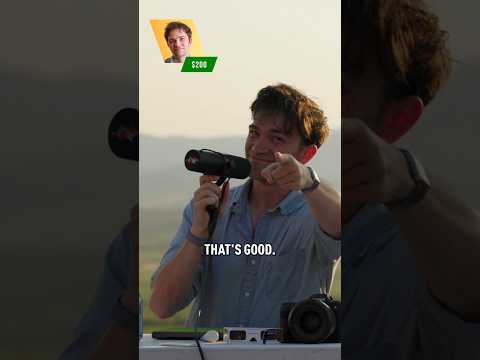
- what we do when ad breaks." And you didn't screw up. >> Now we're cooking. Marquez told me that
- if I can tell him a fact he's never heard about an eclipse, he'll give me $100 per fact. And then what did you do?
- You looked up a bunch of crazy obscure stuff. I looked up facts Marquez did not know about the eclipse.
- >> He literally Googled. >> Bring them on. All right. Did you know? Did I know that helium? Let me let me
- try to see if I know before you've revealed the whole thing. >> Word for word. Word for word. Did you
- know that helium >> Uh-huh. You know, >> it's one of the gases in the corona. >> Keep going.
- >> Is the only element >> Uhhuh. >> we didn't discover on Earth. >> Okay. Helium is the only element we
- didn't discover on Earth because the sun. No. >> Wait. You mean that like balloons
- predate or like are after space travel in the in the tech tree? >> That's exactly what I'm saying. You're
- saying that the periodic table had no helium on it and the that was the first element, maybe the only element that was
- discovered by looking out >> 1868 during an eclipse in um in India. >> Uhhuh. >> They saw a band of color that they
- didn't know what it was. >> Wait, who banned it? >> Oh, they banned the color. Yeah,
- >> I can't see it. >> They saw band color. Yeah. Sorry. [laughter] Uh, and just like in our episode about
- how the James Web W JWST, James Webb space telescope uh, sees into the past, >> they used that to pinpoint the exact uh,
- element that was happening and they didn't know what it was and they named it Helios. Helium helios after the sun.
- >> That's why it's called helium and that's how I discovered it. >> Do you know how I know you get the
- hundred bucks? Cuz Marcus went, oh >> yeah, [laughter] >> you don't say that when you know it. Can
- I get a chance at 100 bucks? >> That's good. I don't know if that's an I guess it's an eclipse.
- >> It was during an eclipse. Yeah. Yeah. Okay, that's fair. I'll give you that. They saw it around the corona.
- >> What year did you say? >> 1868. >> But the James Webb Space Telescope. >> No, no, no, no. Just like during our
- Dubst episode where they use that use the elements. Yeah, they discovered they whatever. You just listen to it.
- >> Listen to the That's a good That's a good one. I did not know that. >> Wow. >> 100 bucks. 100 bucks.
- >> There it is. Have another one. [laughter] You want to go back to back? You can go
- for back to back. >> You want me to go back to back? Another fun fact. >> Now, if you didn't know this one, you
- owe Marquez 100 bucks. >> No, no, no, no, no. >> Double or nothing. [laughter] >> Uh, I'm trying to remember it. I have to
- open my laptop. >> Can I throw one out there, which Marquez knows because he read this. So, uh,
- listener of the show, Tom, is an astronomer and sent us a bunch of facts. I asked him to get as obscure as
- possible. And the way I know Marquez research much is he was >> obscure. >> I'veclip.
- >> I was working on that. But there was one where you knew a little bit about it.
- But um so in 2024, amateur astronomers discovered a comet during the eclipse. [screaming]
- >> Oh, >> sorry. That one's not really anything either. It's just 50% obscurity. I can
- tell. Yeah. >> Which was then So Marquez knew about the comet during the eclipse, but it was
- then destroyed the next day during its closest approach to the sun. >> Something also similar happened in 1882
- in Egypt where they saw a comet and then never saw it again. >> Wow. >> Crazy. That's crazy.
- >> That's wild. Okay, I remembered mine. >> Okay, so maybe this one doesn't count,
- but the other one did for sure. >> All right, >> so uh the Spanish are preparing for a
- really intense hit to their power grid because 5 megawatt of energy is going to drop between the 90 seconds that the
- eclipse is happening, which is 13% of their total grid capacity during that time.
- >> Yeah, we passed a lot of solar panels. I was noticing that a lot of solar >> 13% of the total energy they are
- receiving at any given time is just going to disappear. And so they are like a little bit worried that people might
- lose power and they need to make sure that the like all of the stored energy actually can get pushed through the
- grid. >> That is a fun fact. >> 13%. >> Wait, did you know that? >> I did not know that.
- >> That's 100 bucks. >> I did not know that. I'm telling you. >> That's good. That's really good.
- >> I'm telling you. >> We got fun facts. [laughter] >> Yeah, Mark has your turn.
- >> I can see it. I can see it slowly starting to get slightly dimmer. I don't know if you guys are feeling that, too.
- The shadows are a tiny The sun is officially half covered. Yeah. >> And it feels a little different.
- >> Yeah. >> But it's not like dramatic yet. >> Yeah. >> Just a little Oh, I looked Okay.
- [laughter] Uh, don't do what I did. Okay. Uh, let me see if I have another fun Oh, yeah. Okay. So, eclipses are uh
- eclipses are very predictable as you know. So, we can >> I'm so excited to tell [laughter] this.
- So we can look forward on the calendar and just decide like you guys have probably already heard about the next
- major eclipse which is >> uh Egypt in 2028 or 2027 >> uh which has a famously 6 and 12 minute
- totality >> crazy >> which is insane. The one that we are going to witness when we reach a 1.0
- magnitude is uh about 90 seconds long which is still crazy. 90 seconds of no sun in the sky is still crazy. But six
- and a half minutes is historically long. >> That's long. >> Do you guys know the longest total solar
- eclipse that is theoretically possible on planet Earth? >> 7 minutes and 28 seconds.
- >> I feel like you spoiled this at dinner last night. >> I think you did, but I can't remember
- correct. >> 7 minute 29. >> Were you paying attention [laughter] >> to Marquez talking at dinner?
- >> Closer to eight. >> No, it was seven. We don't have whiteboards, but you can all just uh
- >> Yeah, I'm saying 729. >> 728 or something. >> I'm going to put in the sixes. I'm going
- to go save 45. >> Taking the over. >> Yeah, David know that it's a just short just short of 7 and a half minutes.
- >> I knew Dave was paying attention cuz he wanted 100 bucks. >> Theoretical eclipse possible. So, that
- one next year, not that I have plans to go, but if anybody's going to be in Northern Egypt or Northern Africa in
- 2027, you're in for a treat, my friends. >> It's so long. You have to go. >> How far did we travel for the 92nd
- [laughter] eclipse? >> For this, >> we brought nine people. Yeah, >> we traveled an 8 hour flight, a 3-hour
- car ride closer to like 10 hours for some of us. >> This is funny. It breaks my golden rule.
- Actually, maybe you have this rule, too. I have a golden rule whenever I'm playing Frisbee uh for like pickup or
- any random stuff. I I don't like to drive for longer than I'm going to play. >> So, if it's like an hour long of pickup,
- I won't drive more than an hour to go. >> We totally broke that rule for us. >> We are witnessing a 90 secondond event
- that we traveled uh days for. Yeah, but we're potting for eight hours. So true. >> And this is this is an elite amazing
- podcast. >> Wait, Andrew, you said for some of us the drive was more than three hours.
- >> We got a flat tire on the way. [laughter] >> That's true. Full story on channel.
- >> But at least you got a flat tire in like a super fun populated area full of stuff
- to do, right? >> Listen, [laughter] I'm going to say truck stop, but compared to truck stops like in Carney,
- it was a pretty sweet truck stop. And there's an adorable dog that kind of looked like Mac. So, if I'm going to sit
- behind at a truck stop, I'm going to do it with a dog that looks like my old one.
- >> Very cute. That's pretty fun. >> Working on pixel content in the Spanish sun.
- >> I have a bunch of sweet pictures of David working on a bunch of articles in random spots [laughter]
- along the side of the highway in Spain. >> Nice. >> All right, I have another I have another
- >> random trivia question for you guys. >> Give it to us. >> So, David has one point. I don't know if
- we're keeping track. >> One. I thought it was two. >> One point and $200. >> Oh, yeah. Well, that's that's separate.
- All right. [laughter] So officially this is the second solar eclipse that some of
- us have seen which uh we traveled and went specifically out here to see this one. Wow, it's getting a little darker.
- >> Yeah, you can tell it's getting 61% obscurity and >> uh we dropped about 4,000 lux brightness
- too. I feel like it's getting colder for sure. >> What's the temperature? 88. >> 88.
- >> 88. >> It feels like 78. That's That's crazy. >> Sweet. There is a term specifically a
- Google dictionary defined term for people who go and travel and go see eclipses specifically. Do you know what
- this word is? >> Eclipse chaser. An eclipse chaser. >> Yeah, buddy. I knew this one.
- >> You know the word? >> Oh, it's an actual word for eclipse. >> God damn it. >> Wait, is it like a Is it a portman to
- like two words combined or is it just >> Is it just one word? >> Um, it is it is one word.
- >> Solar file. >> Damn. Damn. I was going to say helopile. >> Is it just astronomer?
- >> Lover of the sun. >> You guys are on the right track. I don't want to give it away, but that's not a
- bad guess. >> Uh, is it a >> solar? >> It has [snorts] a I'll keep giving you hints until you get it.
- >> On a scale of 1 to 10, how silly is it? >> It's like a five. It's kind of silly.
- >> Oh, so it's mid. Midwimsy. Uh, >> midwimsy. >> Is it coverage enthusiast? >> You're close. You're so solar
- enthusiast. >> You combine what you just said with what you said earlier. File or the
- >> Yeah, solar file. Is it a cover file? >> You're close now. You're close now. >> It's a
- >> It's Latin root. >> Oh, >> co cover file. >> You're so close. >> Uh, what's >> If you don't know an hour,
- >> that's fine. >> Hit me. >> An umbra file. Umbra, the Latin word for shadow uh is someone who chases eclipses
- and travels for them. That is an umb. >> So, we're all Umbra files. I'm going to
- go look at this >> apparently. Yeah. >> I looked recently. It's It's like crescent moon.
- >> Holy moly. Okay, that is a full crescent sun. We can get there. >> Wow. >> We might be close to the podcast where
- none of us are looking at the camera anymore. >> Marquez, is this what you'd call a
- waxing gibbous sun or is that >> waning? But yes, >> there is a wax a waning crescent. The
- opposite of what you said, actually. [laughter] But it's pretty cool. >> Give us the sun. Oh, I looked at it and
- it didn't hurt. >> Yeah, it did. [laughter] It did hurt for a second. >> There was a quick glance. Don't do it.
- Don't do that. Don't do that. >> So, we're getting close. I think you'll have to excuse me. I'm going to try and
- put the drone up. >> We're going to do it. >> I like this idea. >> Good luck. >> So, I will just
- >> While you do that, >> can I talk a little bit? >> I'm going to start getting it ready. And
- >> what's the time left? >> So, we're about 14 and a half minutes from >> It's crazy how how interesting the light
- is getting right now. >> Yeah, this looks beautiful. >> Do you think if we held up like a
- >> You see that hat Har Harper has right there? Can you bring that hat over here?
- So, what I see a lot of people doing when the sun gets really really small, it's like a point light in the sky and
- people bring literally like a colander, like a like a strainer or whatever. >> And when you do and you hold it up to
- the light, the shadows are like crescentshaped. >> This is because it's like a pinhole
- camera. Exactly. So, this is a bunch of pinhole cameras. >> I am seeing the thing where depending on
- the angle you hold stuff at, your shadows get softer and sharper. >> And this specific eclipse, uh, the
- shadows go horizontally. So, you're going to have to have some sort of surface to shine it onto.
- >> Thank you. This is bringing a crate over. >> This is a total coincidence that we have
- this crate, but it's got these slots [clears throat] in it. >> Great coincidence.
- >> Oh, that's so weird. >> Wait, take a video. >> Look at these. >> You can kind of see it.
- >> You can kind of see it. >> Yeah, it'll get more interesting. >> Okay, as we go.
- >> A pinhole camera is basically any small tiny tiny little hole that inverts the
- light that's coming through that hole. The more circular, the smaller. >> Oh, there it is. Look at that. Look at
- that. You can uh you can basically make a pinhole camera out of anything. And the reason it gets really interesting is
- because the light source is the sun, which has a mask on it now. And because it has a mask, all of the little dolets
- are going to have little shapes. So, you ready for this? >> I'm ready. >> See the bottom? See the holes in this?
- See the circle in the middle? >> I see. Oh, there's a circle. We got a circle. >> Whoa. No circle.
- >> It's a crescent. >> Oh, I see it. >> There's a singular circle. >> Crescent circle. There's a crescent.
- >> It's supposed to be a circle. >> I don't know if you're going to be able to catch that. camera. [laughter]
- >> Adam's pointing his camera at it. We'll cut it in if it looks any good. But >> if we just bump the contrast up to
- 1,000. Yeah. >> I'll just put a Michael graphic. How quickly can you turn these around?
- [laughter] >> Yeah. Yeah, that is pretty awesome. Yeah. >> All right. I did mention the the width
- of the path of totality earlier, so I guess that's off the table for points. >> Only 150 miles or so uh to really be in
- the path totality. >> Yeah. That's the path of like how wide it is for you to be in the center of the
- shadow where a magnitude is one and you get a total solar eclipse >> of the heart.
- >> A 99% solar eclipse will look like this. It will look like it's daytime. It won't
- get nearly as dark. >> So, I'm very excited for the dramatic >> Yeah. I remember last time when you guys
- were in Ohio, I remember going to the beach that day to try to get a better look at it and I it couldn't you
- couldn't tell >> cuz you had a partial. >> Yeah. Unless you had the glasses with
- the glasses and you looked at it, then you can see a little bit of uh the obscurity. But
- >> yeah, >> other than that, >> that's crazy. >> All right, here's a crazy fact. And
- there's zero shot you'll ever get it, so I won't even try to ask. I'm just going
- to tell you the fact. >> Okay. >> The next Halloween total solar eclipse, >> 2692. That's a while. [laughter]
- >> Oh, the last New Year's Day total solar eclipse, >> the last one >> was 1889.
- >> Oh, that's actually pretty recent for that one. Next one. >> Which holiday >> Uh-huh.
- >> can you never get a total solar eclipse? >> Leap year. >> Holiday. the leap year.
- >> My birthday. >> Um, >> holiday. Christmas. >> That for sure. >> Is it Christmas?
- >> I'm pretty sure. >> Cinco de Mayo. >> I said that already. >> Oh, holiday. >> July [laughter] 4th.
- >> No, >> that is uh Sorry, that was a call for our temperature check, which I guess we
- sort of already did, but uh Rufus, I can't Can you Can you yell at me? >> 87.9 >> 87.9. So, we dropped a whole.1° since
- the last >> It feels a lot colder, though. >> Yeah, >> it's getting breezy. That's why the
- droplets on my back are not falling as often now. We're at 656 lux. >> All right.
- >> 656 line on the graph is dramatic. >> Yeah, we have we have a a recording a graph that just is
- >> watching. We probably should have screen recorded that computer when we started,
- but you know, whatever. >> Um, but uh we started about 7,000 lux of light. So, we've dropped so much.
- >> It is so crazy. You still can't stare at the sun, but it's almost completely covered.
- >> Oh, it got way dark. >> Yeah, it got way darker. >> I thought you It's getting dark fast,
- >> which is cool. >> Back to your question. I'm gonna say Valentine's Day. >> No.
- >> Damn. >> Uh, slight. >> Is it a holiday in the United States? >> Yes. >> Is it the Fourth of July?
- >> It is not. >> Did we say You said Thanksgiving. >> Is it Christmas? >> I said is not.
- >> I didn't say Thanksgiving. >> New Year's Eve. >> No. >> Easter. >> Yes. Easter.
- >> Wait, why? >> Why? >> Because of the way Easter is drawn into the calendar. It's always
- >> a specific set of dates relative to the full moon. >> Relative. Yeah. And uh by definition, a
- total solar eclipse can only happen during a new moon, which is about 4 weeks after.
- >> And Easter is typically 2 weeks after the first full moon of the month. So you
- can never have a total solar eclipse on Easter. >> That's crazy. >> That's wild, right?
- >> Yeah. Crazy. >> Yeah. >> Anyway, okay. Is it is cooking now. >> Oh my god, it's getting so good.
- >> Yeah. Looking across the fields is insane. >> Don't look at it. The shadows are
- >> pin sharp. Yeah, pin sharp right now film camera. >> You don't even need the glasses. You're
- doing this. You're not using it. >> Andrew is just free soloing the drone right now.
- >> Drone is up. >> While Andrew gets that drone in the sky, I just want to say while I have 30
- seconds, Rufus devised a genius way to measure the light out here with this little clip with a piece of sort of
- diffused soft white plastic. Yeah. >> So, we're actually using the iPad's camera looking at that piece of white uh
- to deduce how bright it is outside. >> Is it the frontacing camera? >> Yes, it is the frontacing camera.
- >> I think it would be more dramatic if we were >> looking the other way >> facing the sun.
- >> Well, we're going for ambient light. So, if it was facing the light, the camera
- would just be looking right at the sun and it would blast. >> That's an incident meter over there.
- >> It is literally an incident meter and we've been checking with an incident meter and it is just so accurate. It's
- crazy. Rufus. Absolutely. >> No, not spot on. spot me [laughter] incident on. >> Incident on.
- >> Shout out Rufus and his genius technological skills. >> He was like, "What if we just get clip
- put clip on iPad and we were like, okay, [laughter] >> this is so cool. >> This is interesting." It says, "I
- currently have weak satellite signal." >> Whoa. >> And I can't go more than 10 m. So,
- >> is there a potential that that's because of >> satellite shouldn't be affected? I think
- >> Why does a satellite need to talk to the drone? >> Sorry. I think it should be fine.
- >> Uh yeah, reasons. >> Oh, there's a bird. Oh, the birds are leaving. >> Oh, they're so upset.
- >> Oh, there's only two. >> It's fine. >> They're going crazy. >> They're just having a good time. Fun
- fact, there's only two birds in Spain. >> The light is [laughter] so >> There they are.
- >> The light is so Yeah, we're entering the last couple minutes where we're just
- going to be looking around and gawking at what's happening. And hopefully video viewers hopefully if you're an audio
- listener, you switch to the video version so you can really feel what's going on.
- >> Uh with us, >> we're about we're about to hit 8 minutes. >> Yeah, 8 minutes. The light turns
- metallic. Now, I read this in the description that the light turns metallic. I'm not sure what metallic
- means, but the light feels really >> I think I can actually explain this one. Uh I believe it is something called the
- perkingi effect. >> And the reason the perkingi effect is that the uh our eyes >> um Wow. Okay. I I reread this so many
- times and I know I'm going to get it like slightly off, but our eyes deduce >> brightness from reds much more than
- blues. >> And so as the sun begins to go away, our eyes use fewer cones which see color and
- more rods which see luminosity. So we become way less sensitive to red light, >> which is a lot of what's around us. And
- that's also why faces sort of look monochrommy during an eclipse. >> Yeah, certainly. I don't know. I can't
- see the camera feed, but I bet we look really different than we did. >> Do you think mantis shrimp freak out
- during the eclipse? >> Wait, why? >> Cuz they can see like nine times the amount of colors that humans can.
- >> Oh, really? >> Was that a shrimp fact during the eclipse? >> I think no one. >> Where's Mariah? [laughter]
- >> Yeah, many of them are above ground. >> Which can also punch the speed of a bullet.
- >> Wa. We could have two. [laughter] That's the fun fact. >> I'll do the fun facts around.
- [laughter] >> Yeah. >> I think that green light is half Your eyes are half as sensitive to green
- light because uh that's why there's two green pixels for every red and blue on TV on a display. Yeah.
- >> The the vibe's getting weird. >> I'm feeling like an accelerated sunset right now. This the wind is picking up.
- >> It's like if you put a sunset on like 2x speed. >> Yeah. Like 5x speed. >> It feels like a photo filter on.
- >> This is crazy. This is the the dynamic range of the environment is very low right now.
- >> This is Yeah, >> I'm gonna take photos of you guys. >> I'm gonna take a photo of this. It's not
- going to show up. This is crazy. >> Um, >> do you have any other fun facts? >> I do have one more. I knew it. And this
- is >> this is maybe the I don't know if I say this is a fun fact or just a crazy a
- strange fact. >> So, first of all, this is sort of blended. >> There are several different types of
- eclipses. There's lunarclipses, as you know. There's this, which is a total solar eclipse. There's also partial
- solar eclipses. There's also something else. >> The wind's taking crazy. >> An annular eclipse. Does anybody know
- what that is? Every year >> it's when the moon blocks the year. [laughter] >> Oh,
- >> not annual. Annular, >> isn't it like it has to do with another eclipse? Correct.
- >> No. Does the eclipse the eclipse? >> Is it like yo annulo to annulas? >> Oh my god. We're in Spain for 3 days cuz
- we're in Spain. Oh, the shadows are getting long. I'll just Okay, an annular eclipse. So, as you probably know, the
- moon orbits the Earth. Sometimes the moon is a little bit further away from Earth.
- >> And so, when it does line up perfectly and cast a shadow on Earth at its maximum furthest distance from the
- Earth, it's actually not big enough in the sky anymore to fully cover the sun. And so, it will do the line the
- alignment in the sky, but the magnitude never reaches one. And you see some of the outside of the sun as well as the
- corona. And it's called a ring of fire. Oh, that's a very special, very different looking eclipse.
- >> And that one you still probably can't look at. >> I think you probably want to play it
- safe and not look at it cuz it's not a total solar eclipse. You're seeing some of the
- >> default answer should be don't look at sun. >> Yeah, that's [clears throat] fair.
- [laughter] >> But uh very very interesting phenomenon that leads to my final fun fact, which
- is that >> the moon is moving away from the earth very slowly at a rate of about one inch
- per year. >> Wait, so there's a future where it just like spins away? >> Yes. which means
- >> there won't be solar eclipses forever >> which means there's a finite number of
- solar eclipsees. So there will be a last total solar eclipse. That's >> Will be here for that.
- >> We're potting. >> We will not be there for the last. It is so much darker. >> Got real dark.
- >> I mean, especially when you take the glasses off. >> Yeah. >> So the the question is how long till the
- last total solar eclipse? >> Is it before or after? >> Just just random. Totally random guess.
- >> Be more than like 500 years. >> You're going to be dead. It's fine. >> Well, I'd like 10,000 years.
- >> 10,000 years. >> I'm going to go with 1 million. >> 1 million years. >> 1 million years.
- >> Okay. Wait. Let's >> I can I can do some napkin math. You said it moves away at 1 inch and I know
- it's the ratio is 400 to 400, right? And that's miles. I mean, it's not 400 miles, but so how many miles are How
- many inches are in a mile? That's like >> Somerville 250,000. >> That's 5,000* 12. So that's like 60,000
- in. So I'm going to guess uh I've lost track of the math. I give up. >> It's about half a billion years.
- >> Oh, swag. >> So I win. covered. >> It's almost completely covered, guys. >> You know what's crazy? 3 minutes left
- till totality. >> Yeah, this isn't even totality yet. >> If you look through the glasses right
- now, it's almost completely covered, but outside it's still pretty bright. What is the What does the magnitude look
- like? It's like 90% coverage. >> It's probably 90 98. >> It's got to be >> 97 97.
- >> Wow. >> Yeah. >> My coverage estimate 94, but it's just an estimate. >> It's a sliver in the sky right now.
- >> Here's something that I remember last time that happened. That automatic light
- just turned on because it's getting dark enough that the lights are starting to think
- >> all the sunset. >> Oh, it's getting so dark. >> All the sunset stuff. Oh, I guess there
- hasn't been a K. >> If you're driving a car, your headlights just turned on. Like all the sunset
- stuff is happening right now. >> I think I heard my first cricket also starting to get
- >> uh that was me. >> Starting to get cold. [laughter] >> The birds have gone quiet.
- >> Yeah, it's >> the two Spanish birds. The light is dropping. >> It's getting so crazy right now. And
- we're closing in on that last phenomenon, which we're going to be able to see, which is the shadows racing
- through this valley. In about a minute, they're going to start really accelerating and coming towards us for
- that last 1% to get to totality. >> Do you think we're going to be able to like see it coming or is it going to be
- like blink and now we're covered fast? >> That's a great question. I have no idea.
- I'm really excited to find out. We're like up a little bit in terms of elevated.
- >> Yeah, we're like elevated over the valley which I'm excited to see what that means cuz last time we were in the
- middle of a field in Ohio at the same level as all the other grounds. So, >> I can see lights turning on.
- >> Oh, it's getting darker. >> I can visibly see it getting darker. >> Wait, still don't look at the sun, guys.
- >> Don't look directly at the sun, but we can kind of look a little bit. [laughter]
- >> The uh the Elio Rufus 9000 will alarm for when we need to put our glasses back
- on. >> Okay. Yeah, right at the end of totality when it pokes out. That's a great
- >> When you hear the auga, >> it's [laughter] time to be safe, >> guys. It's getting so dark.
- >> 90 seconds. 90 seconds till full coverage. >> Oh, look at the birds. They're freaking
- out. >> The birds are flying away. It is getting dark fast. >> Oh my gosh. It's getting fast.
- >> Oh my gosh. >> Wow. We got a perfect day, guys. No clouds. >> Insane. >> Perfect day cuz my four friends are
- here. We're here with buddies. Yeah, screw the rest of you guys. Sorry. >> Well, I [laughter] I'm continuity, man.
- I'm building the scene. >> Only the people we can see. >> Sorry. Harper was on camera. So, and I
- can see myself. >> My six friends are here. >> I can see the eclipse. >> There's less.
- >> Sorry, Brandon. >> Come on. Then it's continuity. >> Oh my gosh, it's getting so dark.
- >> Friends are here. >> Sorry. Everyone's just watching us freak out because we have like 30 seconds
- left. >> 45 seconds. >> How am I supposed to have my mic and take photos? Oh my gosh.
- >> So, the the last 30 seconds, uh, shadow bands rippling. >> It's getting I'm not seeing shadow
- bands, but wow, there's a lot more shadows. >> All right, 30 seconds, folks. 30 seconds.
- >> It's so dark. It's so dark. >> It's the slimmest sliver of a pinpoint of a sun in the sky you can imagine.
- >> Mark, where are your glasses? >> 20 seconds. I'm not looking at the sun, >> okay?
- >> But it got dark really fast. >> That was incredible. >> That's We're almost there. We're almost
- there. Oh, guys, it's happening. It's happening right now. It's happening. Look at it. You can see. You can look at
- it now. I'm waiting. >> I mean, I'm looking. [laughter] >> So crazy. >> Whoa. It's dark.
- >> There's a shadow. There's a shadow. There's a shadow. >> God. It looks like a ring right now.
- >> It wiped across the sky from right to left. >> Holy >> From right to left. >> Oh my god.
- >> So the right side across the left. And there it is. And that's the coolest thing I've ever seen.
- >> Wow. >> This is way cooler than last time. I think this >> freaking cool. It's so cool.
- >> Enjoy the next 90 seconds. No, you're good. You're good. Video viewers hopefully are getting this crazy shot
- that Brandon is manning right now to the left. Everyone looking at the solar eclipse,
- >> it sees it. >> Oh my god. >> No way to see that. >> So what you're seeing is uh Bailey's
- beads. So there are craters on the moon that slivers of the of the sun are actually peeking through. So you can
- still see a bit. So the the glow around the moon is the corona and then the little Bailey's beads and the little
- birds flying around too. >> Marquez, you did prove it. I did ask earlier to prove it.
- >> I don't hear any crickets, but I do see one very lucky pilot getting a airborne
- view of this insane flying. >> This is so crazy, guys. >> It's It's like I remember it being the
- coolest thing I've ever seen. >> Oh, wait. Sorry. I want to acknowledge the horizon is bright bright bright
- bright. Dark by the sun. Bright bright. >> So, to the right you can see the end of
- the shadow. >> Oh, and there's a crazy cloud over there. I don't know. We couldn't see
- during the daytime. It'll go away again when the sun comes out. Like the sky has
- a shadow on it. >> Yeah. It's crazy that you can see it moving from right to left
- >> and you can see the corona blowing up on the edge. On the left edge there's a big
- solar flare. >> Oh my god. >> Oh my goodness. >> Oh my god. It's so beautiful. >> This I mean
- >> maybe because it's closer. You know, the sun seems brighter >> than last time we did it. Maybe because
- we're in Spain and not Ohio. >> Oh, glasses on. Glasses on, folks. >> I glasses on. Oh, wow. That's so fast.
- Roffus 9000. It did it. >> Nicely done, Rufus. Wow. >> And now everything's going to
- [laughter] >> And the drone. Luckily, I checked again. It stopped recording at one point, but
- now it recorded through that whole >> And it is getting lighter again almost immediately. It's like sunrise.
- >> Oh my gosh. >> Holy crap. That was >> nice little uh sunrise from right to left for you.
- >> That is >> So what I noticed already immediately, remember the super high overhead one we
- saw? We had a 360° sunset. That one was far more directionally right to left, >> which is cool that we got to see that.
- >> That's not a bet. >> I'm literally shaking right now. >> That was so cool. >> That was so cool.
- >> Wow, >> that was amazing. >> It feels like you stepped into a sci-fi movie because you see this stuff happen
- in sci-fi all the time. There's eclipses happening in Star Wars and all that stuff
- >> and seeing it with your eyes is it just doesn't feel real. It's so >> It doesn't That was so cool. I know it
- is like very privileged of us to say if you get the opportunity go see one because it's not easy to
- >> but if you have the chance >> I don't want Yeah. >> It's not as good as like Instagram
- reels. >> Yeah. [laughter] But >> seeing this on YouTube is way better. >> Yeah. You can't share this with one
- click. YouTube still hasn't figured that out yet. >> I really I'm hoping the capture was as
- amazing. I mean obviously seeing it in person is going to be the coolest thing ever, but I hope our capture gives
- people a taste of what we just got to see. Um, >> can you imagine that for 6 and 12
- minutes? [laughter] >> That would be pretty surreal. I mean, appreciating it for 90 seconds was fun.
- Getting to stare at it for 6 minutes. >> Can you imagine seeing that not knowing
- it was a solar eclipse? Just >> Yeah. >> Oh my god. >> There's a lot of stories about that.
- >> I I would make the Scooby-Doo sound. I would go, [laughter] >> "The sun is coming out, guys. This is
- >> Good morning. Good morning. >> Good morning." >> Yeah. The fact that eclipses are
- predictable has led to a lot of crazy stories in the past and will of course lead to crazy stories in the future.
- >> Um, have I convinced anyone here to become an umbra file with us? >> We kind of already are. We've already
- done two. >> We've already done this. We did the first one by accident. This one is our
- two is a coincidence. Three is a pattern. If you do three, >> that's fair. >> You're in the club.
- >> You're paying for it again. >> No. Actually, Marquez, I'm going to I'm going to go back to one of my favorite
- German expressions ever, which is kind once is never. That's right. Now that we have done this twice, we have
- done it once, which is never >> feels like we we are way more prepared. >> What does that mean? [laughter]
- >> What just happened? >> I don't know. It's German. >> I don't know what that's supposed to
- mean. >> No, it's like I I don't even know why I'm going to this right now, but the
- idea that like if you do something once, it's like, yeah, you do, but as soon as
- you do something twice, it's a part of you. You know what I mean? Once is never.
- >> Okay, >> I like it. >> That was beautiful. I can see that. >> Landing the drone very safely and uh
- hopefully we got that shot. Um >> it's day again, guys. >> It's day again. >> I hope you slept well.
- >> The sun's coming back out. >> Good morning. >> God, seeing that with your eyes is so
- crazy. Wow. >> I I don't have much more to say. I mean, you feel the breeze. You see the coming
- sun coming back out. >> Beautiful mountains and all the shadows that we just witnessed.
- >> Um I I think this is a perfect time to end this little podcast. Before we end,
- can we give a big big thank you to our amazing Spanish who >> who helped us out over there?
- >> Well, first, this podcast doesn't happen without Harper, Rich, Rufus, Brandon
- coming to help us. And it really doesn't happen without Juan, Isabella, and Lucia. Um, if you guys all want to come
- in camera for a minute, if you want to be in a YouTube video, >> this is like seriously, you guys put so
- much work into this and it's been a long days and it's I mean, this was the coolest thing ever. I hope all of you
- thought that was really amazing. Also, it's >> glad we got to see it. Glad we all got
- to show it to some people. >> And uh, without any further ado, we'll catch you next week.
- >> Yeah, regular episode. Regular episode. [laughter] >> Talking about the pixel, baby.
- >> Oh, yeah. There's a pixel thing >> there. I don't know. >> There might [laughter] be.
Brief Summary
The Waveform Podcast hosts experience a total solar eclipse in Spain, sharing facts, trivia, and their excitement during the event.
Key points
- The Elio Rufus 9000. A custom-built eclipse timer adds to the excitement of the event.
- Choosing the Perfect Spot. The hosts discuss the challenges of finding a location to view the eclipse without crowds.
- The Moon's Perfect Alignment. The moon and sun appear the same size due to their distance and size ratio.
- Energy Drop During Eclipse. Spain anticipates a significant energy drop during the eclipse, risking power outages.
- Eclipse Chasers. A term for those who travel to see eclipses is 'umbra file.'
- The Perkingi Effect Explained. As the sun begins to go away, our eyes become less sensitive to red light.
Episode highlights
- The Elio Rufus 9000A custom-built eclipse timer adds to the excitement of the event.“This is the Elio Rufus 9000. This is the real deal, bro.”1:08Aug 18, 2026
- Choosing the Perfect SpotThe hosts discuss the challenges of finding a location to view the eclipse without crowds.“We had to find a place that we could get like a low on the horizon view.”7:16Aug 18, 2026
- The Moon's Perfect AlignmentThe moon and sun appear the same size due to their distance and size ratio.“So because of that perfect ratio, they appear the same size.”16:30Aug 18, 2026
- Energy Drop During EclipseSpain anticipates a significant energy drop during the eclipse, risking power outages.“13% of the total energy they are receiving... is just going to disappear.”22:12Aug 18, 2026
- Eclipse ChasersA term for those who travel to see eclipses is 'umbra file.'“So, we're all Umbra files.”27:30Aug 18, 2026
- The Perkingi Effect ExplainedAs the sun begins to go away, our eyes become less sensitive to red light.“It's crazy how our perception changes during an eclipse.”35:30Aug 18, 2026
- A Ring of FireAn annular eclipse occurs when the moon is too far to completely cover the sun, creating a ring of fire effect.“It's called a ring of fire.”38:00Aug 18, 2026
- The Last Total Solar EclipseThe moon is moving away from the earth at a rate of one inch per year, leading to a finite number of solar eclipses.“There will be a last total solar eclipse.”38:36Aug 18, 2026